

License A & C-42 #458947

Originally published: August 2021 | Updated: October 2025
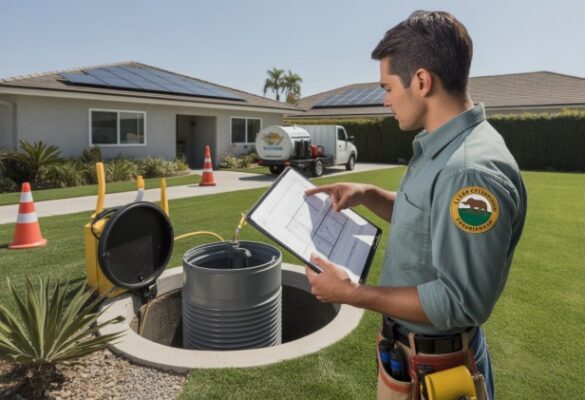
In California, a C-42 Sanitation System Contractor is licensed by the CSLB to fabricate and install septic tanks, leach fields, storm drains, cesspools, and related piping work.
That typically requires permits and must comply with the State Water Board’s OWTS Policy and your county’s local program.
This license isn’t just a regular plumbing credential—it covers specific sanitation system jobs that most plumbers just aren’t allowed to touch.
The C-42 Sanitation System Contractor license is issued by the California State License Board (CSLB). If your septic work is valued over $500, you’ll need someone with this license.
Picking the right person for septic work isn’t just about who has the tools or the know-how.
California’s rules are strict—if you hire someone unlicensed, you might end up with failed inspections or expensive code violations later.

According to the CSLB, C-42 contractors may construct septic tanks, cesspools, storm drains, sewage disposal and drain structures, and install associated piping (including cast-iron, steel, concrete, and vitreous/non-vitreous materials).
If the job total exceeds $500, including labor and materials, California requires this license.
California law requires a C42 license for any sanitation work exceeding $500. That’s the total project cost—labor and materials, not just one or the other.
Work that needs a C-42 license:
Work under $500:
This $500 rule protects you by ensuring that only qualified contractors handle the larger, more complex jobs. Anyone without a license cannot legally work on projects exceeding that amount.
Always verify that your contractor holds a valid C-42 license before commencing any septic or sanitation project.
The license indicates that they have passed the required exams and met California’s standards for this type of work.
Planning septic work in Riverside County? Lanik Septic provides C-42 licensed septic inspections to ensure projects remain compliant and on schedule. Avoid permit headaches—contact us today to schedule your appointment.
If you’re ready to get started, call us now!
California makes C-42 sanitation system contractors jump through a few hoops. You have to be at least 18, and you’ll need a Social Security Number or ITIN.
If the project exceeds $500, you must hold a C-42 license. This covers all sanitation system work, not just septic tanks.
To get licensed, contractors have to pass two exams:
Both are required—the trade exam deals with septic tanks, cesspools, and drain structures. The law exam tests your knowledge of contractor regulations and business basics.
The C-42 exam is all multiple-choice—four answer choices, one right answer per question.
The C-42 classification encompasses the fabrication and installation of sanitation systems, including septic tanks, storm drains, sewage disposal structures, and other related components.
Without this license, contractors can’t legally bid on sanitation projects. California enforces this rule, especially for commercial work.
Plumbers (e.g., C-36) mainly handle building water/waste piping; C-42 covers onsite wastewater infrastructure (tanks, drainfields, pits, storm drains). If soil absorption systems or tanks are involved, you’re solidly in C-42 territory.
| C-42 Licensed Contractor | Regular Plumber |
| Septic tank installation and repair | Indoor plumbing fixtures |
| Drain field construction | Water heater service |
| On-site wastewater systems | Pipe repairs and unclogging |
| Soil absorption systems | Faucet and toilet repairs |
C-42 contractors train in soil science and wastewater treatment. Regular plumbing maintenance is primarily focused on water distribution.
Most homeowners need both types of pros at some point. C-42 contractors work outside on wastewater disposal. Plumbers specialize in indoor water systems.
The licensing requirements couldn’t be more different. C-42 contractors must be familiar with environmental regulations and soil conditions. Plumbers focus on water pressure, pipe materials, and fixtures.
Don’t call a regular plumber for septic work—California law says you need a C-42 license for onsite wastewater systems.
Riverside County follows the State Water Resources Control Board’s OWTS Policy. They’ve got their own Local Agency Management Program (LAMP), too.
If you want a septic system in Riverside County, you’ll need permits and inspections from the Department of Environmental Health.
The Riverside County Department of Environmental Health is responsible for issuing all septic permits and conducting inspections. They run the Local Agency Management Program for onsite wastewater treatment systems.
For new septic installations, start with this department. You’ll need to submit applications, OWTS reports, scaled plot plans, and pay review fees.
The county uses Ordinance 650 to regulate sewage discharge in unincorporated areas.
Required documents:
If you’re in the desert region, requirements might change. Call the department at (760) for details about desert properties.
California law says you need a C-42 licensed contractor for jobs over $500. This protects everyone and ensures the installation’s done correctly.
Mortgage lenders require septic inspections when you sell a property. Only licensed C-42 contractors can give you a valid certification.
Buyers need these inspections before closing. Sellers can’t finish the sale without the right certification.
Required C-42 Services:
Remodeling your house? Adding bedrooms or bathrooms may require upgrading your septic system, which typically necessitates the services of a C-42 contractor.
Building permits often require their involvement. Local health departments want to see the right sanitation systems in place.
If your septic system fails—think backups, foul odors, or standing water—you need a licensed contractor to address the issue. Don’t wait on this stuff.
California only allows licensed contractors to do sanitation work. If you hire someone unlicensed, they’re breaking the law.
Insurance companies might deny claims if an unlicensed contractor worked on your system. Licensed contractors carry proper insurance and bonding, so you’re covered if anything goes wrong.
Health departments only accept inspections from C-42 contractors. That keeps public safety standards in check—no shortcuts here.
Tank or drainfield project coming up? Lanik Septic handles C-42 septic pumping and documentation aligned with Riverside OWTS requirements. Get a precise quote—contact us now to schedule your appointment.
If you’re ready to get started, call us now!
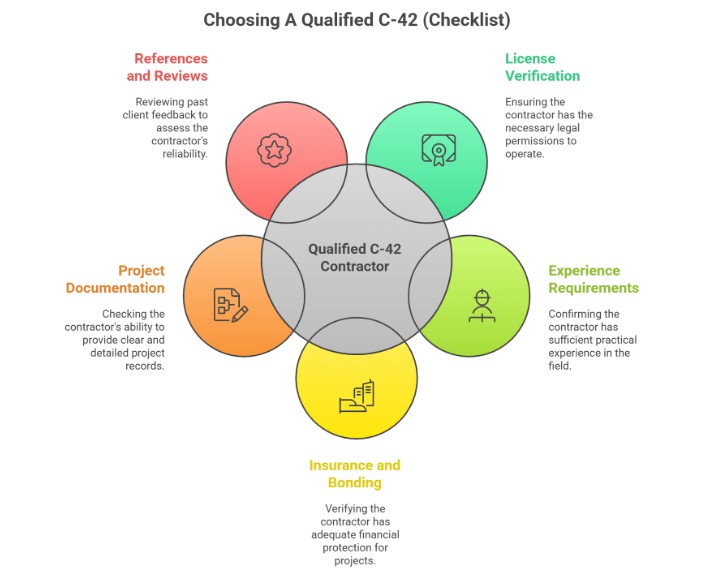
Finding the right septic contractor can really save homeowners from headaches down the road. A qualified C-42 licensed contractor knows how to install systems properly and keeps everything within California’s rules.
Contractors need four years of real-world experience in sanitation work. Ask about their background with septic tank installation and repairs. Don’t be shy about digging into details—they should have stories.
Ask their recent customers about the quality of their work. Scan online reviews and check their Better Business Bureau rating.
Specialization Areas
| Service Type | What to Verify |
| Septic tanks | Installation experience |
| Storm drains | Pipe laying expertise |
| Leach fields | Soil assessment skills |
Ask for references from similar projects. The contractor should explain their process and answer any technical questions you’ve got about septic systems. If they dodge or fumble, that’s probably a warning sign.
California homeowners have specific duties regarding septic systems. If you stick to the rules, you’re less likely to run into big problems or legal messes.
You should pump your septic tank every three to five years. Schedule annual inspections with a licensed professional—it’s not worth the risk.
Most counties require permits for major repairs or replacements. Only C-42 licensed contractors are authorized to handle this type of work.
Key Compliance Areas
| Responsibility | Frequency | Consequence of Neglect |
| Septic pumping | Every 3-5 years | System failure, fines |
| Professional inspections | Annually | Undetected problems |
| Permit compliance | As needed | Legal violations |
| Proper waste disposal | Daily | Environmental damage |
If you skip septic maintenance, you’re risking groundwater contamination and some pretty steep cleanup bills. Nobody wants that.
Property owners have various responsibilities that go way beyond mowing the lawn. You’ve got to make sure your septic system doesn’t harm your neighbors—or anyone else, really.
Keep detailed maintenance records. If something goes wrong, you’ll want proof you did your part.
Teach everyone at home about proper septic care. Even little things—like not flushing harsh chemicals—can make a difference.
C-42 licensing requirements protect California homeowners from unqualified contractors. C-42 certified contractors get the right training to handle septic systems safely.
If you’re a homeowner, check your contractor’s license before starting a project. The C-42 sanitation system contractor license is required for any job over $500 in California.
Licensed pros know local codes and permit rules. They can spot and prevent expensive mistakes that unlicensed workers might miss.
Sanitation systems contractors with C42 licenses handle septic tanks, storm drains, and sewage systems. Their experience keeps everything running smoothly for years—at least, that’s the idea.
California homeowners invest a significant amount of money in septic systems. Working with licensed contractors helps protect that investment and keeps you on the right side of the law.
To obtain a license, contractors must pass trade and business exams. These tests cover technical details and legal requirements—no shortcuts there.
You can check contractor licenses on the California State License Board website. A quick search can save you a world of trouble and help ensure the job’s done right.
Protect your home and groundwater. Lanik Septic performs code-compliant C-42 septic repairs across Riverside County. Stay safe and legal—contact us today to schedule your service.
What is a C-42 licensed sanitation system contractor?
California’s CSLB licenses a C-42 contractor to fabricate and install septic tanks, cesspools, storm drains, and related sewage disposal/drain structures, including associated piping materials specified by regulation.
When do I specifically need a C-42 instead of a regular plumber?
Choose C-42 for tanks, leach/drain fields, seepage pits, storm drains, or disposal structures. C-36 plumbers focus on building plumbing; C-42 covers onsite wastewater infrastructure and subsurface dispersal systems. Verify scope with CSLB if uncertain.
Do septic installs or major repairs in Riverside County require permits?
Yes. Riverside County requires an OWTS Construction Application for installation, repair, or modification; work proceeds under Environmental Health review and the County’s LAMP program.
What statewide rules govern septic systems and local LAMPs?
California’s OWTS Policy establishes a risk-based, tiered framework and authorizes counties to run local programs (LAMPs) that issue permits and set standards consistent with state policy.
Who should I contact locally for septic permit information or assistance with septic issues?
For permits and septic system questions, contact Riverside County Environmental Health (general line: 888-722-4234, after-hours: 951-782-2968) or Building & Safety for plan review and inspection logistics.
How often should my septic system be inspected and pumped?
Plan annual inspections and pump every 3–5 years, adjusted by tank size, household size, and usage. This cadence aligns with public-health guidance to prevent backups and drainfield overload.
What items should never be flushed or poured into a septic system?
Only human waste and toilet paper. Do not flush wipes, feminine products, floss, diapers, or pour grease/solvents/paint—these harm bacteria and clog components. Follow EPA care tips for reliability.
How do heavy rains affect septic systems in Southern California?
Rain can saturate drainfields, slowing absorption and causing backups. Before storms, divert roof runoff, check grading, and reduce household water if soils are saturated; schedule service in drier windows.
Reviews
“This company is BEYOND helpful. Great customer service in the office, hard working employees in the field, reliable and very trust worthy. Having to replace an entire septic system is not something we ever intended on doing, but had to. If it hadn't been for Lanik Enterprises, Inc, I don't know where we would be. I HIGHLY RECOMMEND Lanik Enterprises!”
- Chanel Leos
